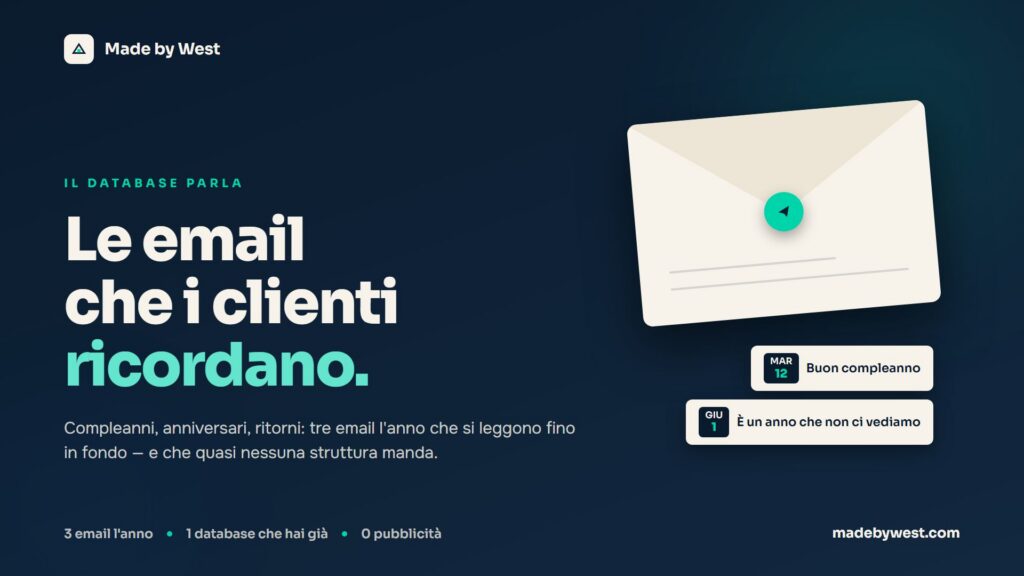
The emails guests remember: birthdays, anniversaries, «we haven’t seen you in a year»
Talk to Made by West
There’s one email almost no property sends, and it gets opened more than any newsletter: the one that arrives on someone’s birthday. It doesn’t talk about offers, it doesn’t talk about you, it talks about one single person on their day. Yet most hotels and restaurants already have the information on file — birth date, stay date, an anniversary noted almost by accident — and they leave it there, asleep.
Move 1: collect the dates without sounding like a filing cabinet
Check-in and booking are the natural moments. «Shall we send you a little something on your birthday?» makes anyone smile. The real question is another one: where does that date end up? If the answer is «in the property system, nowhere», the job isn’t collecting more: it’s starting to use them.
Move 2: three emails, not thirty
- The birthday. Two lines, one small true gift: the prosecco at dinner, late check-out, dessert in the room. Costs little, comes back expensive.
- The stay anniversary. «It’s been a year since we saw you» is the line customers read to the end, always.
- The return, in the right season. Whoever came in June remembers June: the email that arrives in March, with their favourite room in the subject line, isn’t advertising. It’s a memory asking to repeat itself.
Move 3: written by a person, sent by a machine
Automation is fine for the timing, not for the voice. The emails that work sound written by the manager who actually met that person: «How did that Valnerina trip turn out, in the end?». If the text could suit anyone, it will suit no one.
The questions we always get
Isn’t it intrusive? One email a year isn’t. The monthly newsletter nobody reads is — that one, yes, without permission.
And if the customer still doesn’t come back? They’ll come back a little less than everyone else, but more than those who received nothing. And when they do return, they’ll return to you: that’s the part that counts.
In short
Your customers’ dates are already on file. Three emails a year — birthday, anniversary, an invitation to return — turn a database into a relationship. It’s the kind of marketing that costs the time to write them well, and that no comparison site can copy.